
Conversation, simply defined as a combination of verbal and non-verbal “statements between two individuals,” is the fundamental building block of human communication. Conversations can be real-time or asynchronous. Participants can be present, virtually or physically.
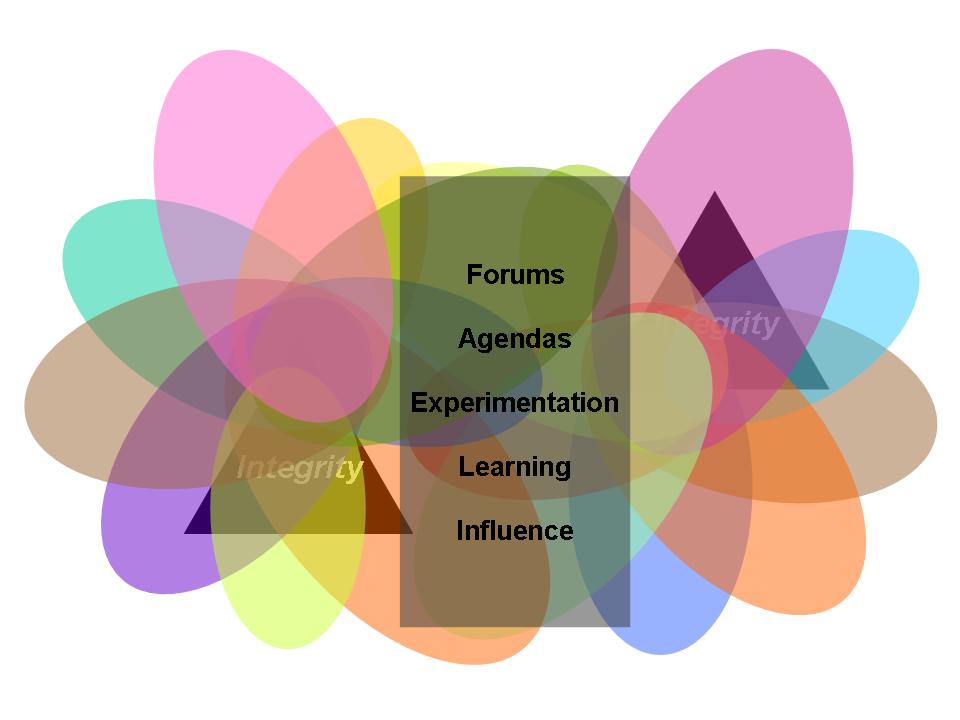
Regardless of how a conversation is enacted, at a minimum it strives to produce understanding. In many cases being understood is insufficient, especially when changes to one’s current condition are expected. A press ensues for agreement about what is, what that means, and what are possibilities for the future. With agreement in hand about a preferable condition it is possible to pursue commitment the impetus for deliberate and purposeful action which drives experimentation, learning, and, ultimately, influence.
Any conversation, formal or informal,, consists of a forum and agenda. A forum is the context in which a conversation occurs. This includes who is in the conversation (invited and attending), where the conversation is held, what technologies are used to support the conversation, what date and time the conversation takes place, even in what language the conversation is conducted. The agenda is the subject of the conversation. Depending on psychological, social, and political factors, the agenda can be explicit and openly stated or implicit and hidden. In addition, there can be more than one agenda in a conversation each shaped by a different motivation and entertaining a unique position along the explicit-to-implicit continuum.
This blending of forum and agenda makes conversation an extension of complex human social behavior. Knowing the agenda(s) requires relating it to the forum in order to get a fuller sense of what is behind the conversation and a better interpretation of what are the expected outcomes of the conversation. Obviously, the more one knows others in the conversation and their contextual circumstances the higher the likelihood of accurately “reading” the agenda layers and offering culturally appropriate responses.
Conversations are convened. Someone sets the forum and determines an agenda and others participate. Convening is an exercise of social power. Everyone is experienced at convening if nothing more than saying “Good morning!” to another and soliciting a response. This requires minimal social power to extend the invitation for the other to join. However, depending on who are the desired participants in a particular conversation, differing levels of power are often required to garner the commitments of each to join.
Social power is directly related to the capacity one has to affect consequences for others. The more a person can influence the context in which the interests of others are advanced or met and costs are minimized, the more convening power that person has. Social power not only grants an individual the license to convene, it also permits a person to NOT invite. A conversation says much about the convening authority carried by the person who initiated it based on who is there AND who isn’t!
Knowledge brokers are conveners. They are granted the authority to initiate conversations based on the trust placed in them by participants that their “ground truths” will be respected and their stories heard and understood. Knowledge brokers gain this trust because of the consistency and thoroughness with which they conduct personal investigations of truth then relate those discoveries in conversations where to speak one’s truth carries a potentially negative consequence. This capacity to know one’s truth, grant others the conversational space and opportunity to hold and state theirs, and pursue the lines of experimentation, learning, and influence that follow understanding, agreement, and commitment is a hallmark of a knowledge broker.
Originally posted to New Media Explorer by Steve Bosserman on Saturday, September 10, 2005 and updated on Saturday, September 24, 2005

 Frameworks for Understanding the World